
Give as a gift
Mona, a young woman in London, finds archived photographs of Arab women cross-dressing in the 1920s. Somewhere between her fantasies and reality, she starts a feverish journey of uncovering lost histories and her own identity.
Director Biography - May Ziadé
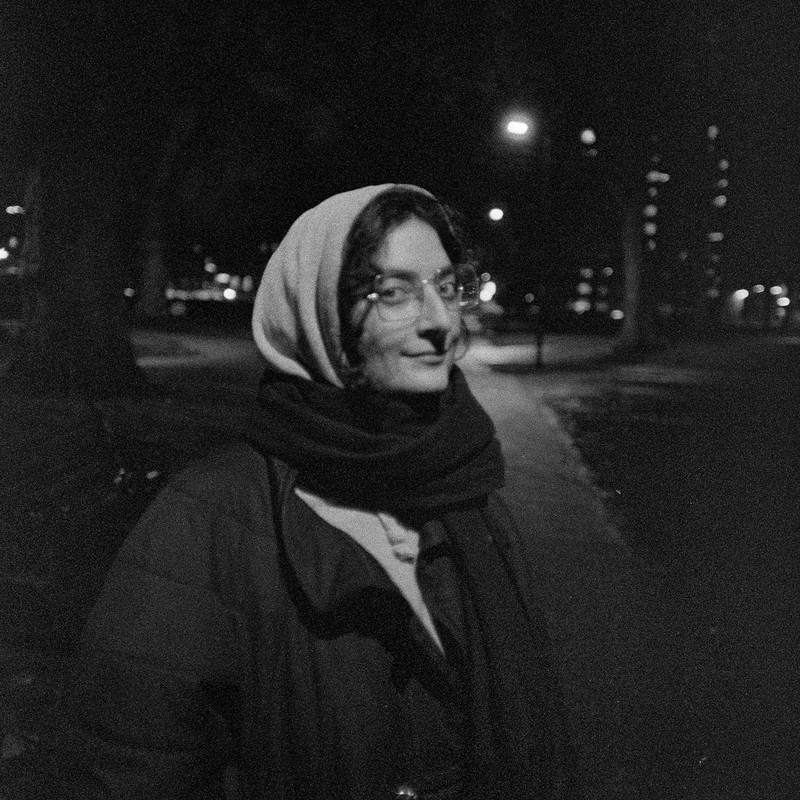
May Ziadé is a French-Lebanese writer, filmmaker and the co-founder of production company Other People’s Films. Through her work she explores the physical and emotional unfoldings of the cultural and social pressures to conform.
Her first moving image micro-short, "Mrs el Araby", looks into the restricted space within which Arab women are allowed to exist in Western Media. It was commissioned by the MENA Arts Center UK and screened at the BFI, as part of the TAPE Collective’s programme, Encounters Film Festival, Mizna Arab Film Festival and at VIDEOAKTION #3. It was nominated for the DepicT! Award and the Iris Prize’s Microshort award.
"Neo Nahda" is May's first high-end short film, and is supported by the BFI Network and British Council. It recounts the story of Mona, a young Arab woman in London who becomes obsessed with old photographs of women cross-dressing in the 1920s and goes on a feverish of uncovering lost histories and her own identity.
Director Statement
“I’m writing this book out of a historical desire for discovery and recovery” Yasmine Taan Nachabe - Reading Marie el-Khazen’s photographs.
I will never forget finding Yasmine Nabache Taan’s journal article ‘Cross-dressing in Photographs of 1920s and 1930s Egypt, Palestine and Lebanon’. The very staged photographs hit a nerve. They challenged everything I thought I knew about the histories of Arab femininity and gender. These photographs sprouted at a time where I was tirelessly trying to build a bridge between Western-fed contemporary understandings of gender and power, and my own roots.
Learning about May Ziadé, who I happen to share a name with, and her famous literary salon and contribution to the Nahda (Renaissance) were extremely grounding and empowering experiences in my life. But these positive feelings came with their own bag of frustrations: why did it take me so long to find out about them? Why is it so difficult to learn about our Arab feminist heritage? The histories of Arab women are invisible.
Neo Nahda focuses on bringing forward untold and subaltern histories of the Arab world and of Arab women by engaging with a visual world that is scarcely brought to screen. I want to see these iconic figures of early Arab feminism live and breathe. I also want to recreate the looks of the period. I truly believe that the Arab-world needs more period films, and that the Nahda in particular is an untapped goldmine for period-design.
I’ve workshopped this project with the British Arab Center’s development programme “Safar” alongside five other Arab filmmakers. Our conversations confirmed that the process of investigating this subaltern history might be just as important as the history itself. The staged photographs of Arab women cross-dressing in the 1920s shatter some of our preconceived thoughts about our histories. But more importantly, they lead us to unanswered questions which our personal relationship to our Arab identity projects onto.
I wish for this feeling to be incarnated in the film by Mona, the protagonist of Neo Nahda, who is on her own emotional mission to learn more. And I wish for the audience to go onto their own journey, alongside Mona. The film is alike the “coming of queerness” genre that focuses not on the “moment one realises they are queer”, but rather when they tie all of the facets of their identities together. Being queer AND an Arab woman, in that instance.
Archival fever that is born out of a lack of queer representation in the past is a story deeply shared by queer people of colour around the world. Recently it was explored in the novel LOTE (by Shola von Reinhold) and in the work of Alok V-Memnon. I hope that this iteration is as powerful and relatable to the queer people of colour who, like me, had to experience a little bit of madness to come to terms with whom they were.
- Year2023
- Runtime12 minutes
- LanguageEnglish
- CountryUnited Kingdom
- DirectorMay Ziadé
- CastNadia Nadif, Eman Alali
Mona, a young woman in London, finds archived photographs of Arab women cross-dressing in the 1920s. Somewhere between her fantasies and reality, she starts a feverish journey of uncovering lost histories and her own identity.
Director Biography - May Ziadé
May Ziadé is a French-Lebanese writer, filmmaker and the co-founder of production company Other People’s Films. Through her work she explores the physical and emotional unfoldings of the cultural and social pressures to conform.
Her first moving image micro-short, "Mrs el Araby", looks into the restricted space within which Arab women are allowed to exist in Western Media. It was commissioned by the MENA Arts Center UK and screened at the BFI, as part of the TAPE Collective’s programme, Encounters Film Festival, Mizna Arab Film Festival and at VIDEOAKTION #3. It was nominated for the DepicT! Award and the Iris Prize’s Microshort award.
"Neo Nahda" is May's first high-end short film, and is supported by the BFI Network and British Council. It recounts the story of Mona, a young Arab woman in London who becomes obsessed with old photographs of women cross-dressing in the 1920s and goes on a feverish of uncovering lost histories and her own identity.
Director Statement
“I’m writing this book out of a historical desire for discovery and recovery” Yasmine Taan Nachabe - Reading Marie el-Khazen’s photographs.
I will never forget finding Yasmine Nabache Taan’s journal article ‘Cross-dressing in Photographs of 1920s and 1930s Egypt, Palestine and Lebanon’. The very staged photographs hit a nerve. They challenged everything I thought I knew about the histories of Arab femininity and gender. These photographs sprouted at a time where I was tirelessly trying to build a bridge between Western-fed contemporary understandings of gender and power, and my own roots.
Learning about May Ziadé, who I happen to share a name with, and her famous literary salon and contribution to the Nahda (Renaissance) were extremely grounding and empowering experiences in my life. But these positive feelings came with their own bag of frustrations: why did it take me so long to find out about them? Why is it so difficult to learn about our Arab feminist heritage? The histories of Arab women are invisible.
Neo Nahda focuses on bringing forward untold and subaltern histories of the Arab world and of Arab women by engaging with a visual world that is scarcely brought to screen. I want to see these iconic figures of early Arab feminism live and breathe. I also want to recreate the looks of the period. I truly believe that the Arab-world needs more period films, and that the Nahda in particular is an untapped goldmine for period-design.
I’ve workshopped this project with the British Arab Center’s development programme “Safar” alongside five other Arab filmmakers. Our conversations confirmed that the process of investigating this subaltern history might be just as important as the history itself. The staged photographs of Arab women cross-dressing in the 1920s shatter some of our preconceived thoughts about our histories. But more importantly, they lead us to unanswered questions which our personal relationship to our Arab identity projects onto.
I wish for this feeling to be incarnated in the film by Mona, the protagonist of Neo Nahda, who is on her own emotional mission to learn more. And I wish for the audience to go onto their own journey, alongside Mona. The film is alike the “coming of queerness” genre that focuses not on the “moment one realises they are queer”, but rather when they tie all of the facets of their identities together. Being queer AND an Arab woman, in that instance.
Archival fever that is born out of a lack of queer representation in the past is a story deeply shared by queer people of colour around the world. Recently it was explored in the novel LOTE (by Shola von Reinhold) and in the work of Alok V-Memnon. I hope that this iteration is as powerful and relatable to the queer people of colour who, like me, had to experience a little bit of madness to come to terms with whom they were.
- Year2023
- Runtime12 minutes
- LanguageEnglish
- CountryUnited Kingdom
- DirectorMay Ziadé
- CastNadia Nadif, Eman Alali