
Give as a gift
Our identities in relation to where we find ourselves are examined in depth in these short films. Personal identification in relation to diaspora is looked at from a variety of angles here. This collection of films covers stories of triumph, hardship, and everything in between.
This screening features 6 films. Toggle between film descriptions by scrolling and clicking on the buttons on the top right.
During WW II Japanese Americans were incarcerated at the Tule Lake Segregation Center in Modoc County, California from 1942 to 1946. For over 80 years, the Tule Lake jail, while iconic, was a mystery. Why was there a jail inside a concentration camp? Piecing together government reports and photos and a survivor interview, we learn of chilling, long-suppressed stories of human and civil rights violations at the Tule Lake Segregation Center. Inmates were beaten and coerced into giving up birthright US citizenship, separated from their families, removed to Department of Justice camps at Bismarck, ND and Santa Fe, NM. Thousands were deported for daring to protest and resist the unjust WWII incarceration.
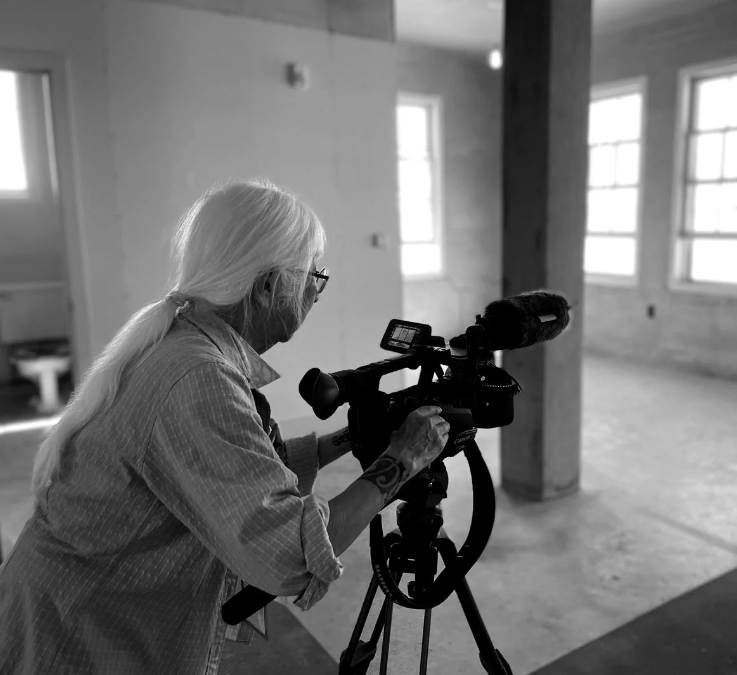 Director Biography - Emiko Omori
was incarcerated as a toddler with her family at Poston Concentration Camp, Arizona. She studied film at San Francisco State University. In 1968 she was the first female Asian American cinematographer at KQED, the PBS station in San Francisco. Omori's defining work, Rabbit in the Moon, explores the Japanese American incarceration experience. Co-produced with her sister, Chizu Omori, it won a national Emmy, an award at the 1999 Sundance Film Festival where it premiered, and was broadcast nationally on the PBS series, POV. Among its many awards is the John E. O'Connor Film Award from the American Historical Association. Hot Summer Winds, based on two short stories by Hisaye Yamamoto was broadcast on American Playhouse to great acclaim. She is a member of the Academy of Motion Picture Arts and Sciences.
Director Statement
The photographs in Defiant to the Last have been around for more than 50 years, and have been misinterpreted by everyone. I first encountered them in Michi Weglyn's seminal book Years of Infamy, published in 1976. The photo credit read, intriguingly, "Smuggled photos courtesy of Wayne M. Collins." (Wayne Mortimer Collins, then a Northern California ACLU attorney, was a fierce fighter for Japanese Americans and Japanese Latin Americans during the camps and after to regain their citizenship.) Some of the photos appear in my documentary Rabbit in the Moon, completed in 1999. At that time, the photographer was unknown. The events being documented were a mystery. What appeared as submission by the inmates was, in fact, a hidden story about protest and resistance to the illegal, violent, unconstitutional actions by the US government.
Eventually, the son of the photographer, John Ross (born at Tule Lake), revealed that the photographer was his late father, Robert Ross, who worked for the War Relocation Authority. Robert Ross, son of missionaries, had lived in Japan, spoke Japanese, and was sympathetic to our plight. In 1945, ACLU lawyer Wayne Collins was sent a second time to Tule Lake to investigate the existence of a second stockade and became aware of the Renunciation Act and the men being held and brutalized in the jail. Here's where the story gets a bit murky. According to John Ross, his father made prints of these photos and left them on a table for "someone" to take. I assume that the "someone" was Wayne Collins. This accounts for the intriguing photo credit in Michi Weglyn's book.
Piecing together the captions and dates on the backs of these photographs with government memos, reports, and a survivor interview, the story of resistance by the inmates emerged. Like a graphic novel, I was able to visually reconstruct one of the most chaotic and insidious times at the Tule Lake Segregation Center.
Several mysteries have been solved: the purpose of the jail, the identity of the photographer, and a true account of what was happening at the infamous, high security Tule Lake Segregation Center.
- Year2025
- Runtime37 minutes
- LanguageEnglish
- CountryUnited States
- DirectorEmiko Omori
- ScreenwriterEmiko Omori, Barbara Takei
- ProducerBarbara Takei
- CastSatsuki Ina

Our identities in relation to where we find ourselves are examined in depth in these short films. Personal identification in relation to diaspora is looked at from a variety of angles here. This collection of films covers stories of triumph, hardship, and everything in between.
This screening features 6 films. Toggle between film descriptions by scrolling and clicking on the buttons on the top right.
During WW II Japanese Americans were incarcerated at the Tule Lake Segregation Center in Modoc County, California from 1942 to 1946. For over 80 years, the Tule Lake jail, while iconic, was a mystery. Why was there a jail inside a concentration camp? Piecing together government reports and photos and a survivor interview, we learn of chilling, long-suppressed stories of human and civil rights violations at the Tule Lake Segregation Center. Inmates were beaten and coerced into giving up birthright US citizenship, separated from their families, removed to Department of Justice camps at Bismarck, ND and Santa Fe, NM. Thousands were deported for daring to protest and resist the unjust WWII incarceration.
Director Biography - Emiko Omori
was incarcerated as a toddler with her family at Poston Concentration Camp, Arizona. She studied film at San Francisco State University. In 1968 she was the first female Asian American cinematographer at KQED, the PBS station in San Francisco. Omori's defining work, Rabbit in the Moon, explores the Japanese American incarceration experience. Co-produced with her sister, Chizu Omori, it won a national Emmy, an award at the 1999 Sundance Film Festival where it premiered, and was broadcast nationally on the PBS series, POV. Among its many awards is the John E. O'Connor Film Award from the American Historical Association. Hot Summer Winds, based on two short stories by Hisaye Yamamoto was broadcast on American Playhouse to great acclaim. She is a member of the Academy of Motion Picture Arts and Sciences.
Director Statement
The photographs in Defiant to the Last have been around for more than 50 years, and have been misinterpreted by everyone. I first encountered them in Michi Weglyn's seminal book Years of Infamy, published in 1976. The photo credit read, intriguingly, "Smuggled photos courtesy of Wayne M. Collins." (Wayne Mortimer Collins, then a Northern California ACLU attorney, was a fierce fighter for Japanese Americans and Japanese Latin Americans during the camps and after to regain their citizenship.) Some of the photos appear in my documentary Rabbit in the Moon, completed in 1999. At that time, the photographer was unknown. The events being documented were a mystery. What appeared as submission by the inmates was, in fact, a hidden story about protest and resistance to the illegal, violent, unconstitutional actions by the US government.
Eventually, the son of the photographer, John Ross (born at Tule Lake), revealed that the photographer was his late father, Robert Ross, who worked for the War Relocation Authority. Robert Ross, son of missionaries, had lived in Japan, spoke Japanese, and was sympathetic to our plight. In 1945, ACLU lawyer Wayne Collins was sent a second time to Tule Lake to investigate the existence of a second stockade and became aware of the Renunciation Act and the men being held and brutalized in the jail. Here's where the story gets a bit murky. According to John Ross, his father made prints of these photos and left them on a table for "someone" to take. I assume that the "someone" was Wayne Collins. This accounts for the intriguing photo credit in Michi Weglyn's book.
Piecing together the captions and dates on the backs of these photographs with government memos, reports, and a survivor interview, the story of resistance by the inmates emerged. Like a graphic novel, I was able to visually reconstruct one of the most chaotic and insidious times at the Tule Lake Segregation Center.
Several mysteries have been solved: the purpose of the jail, the identity of the photographer, and a true account of what was happening at the infamous, high security Tule Lake Segregation Center.
- Year2025
- Runtime37 minutes
- LanguageEnglish
- CountryUnited States
- DirectorEmiko Omori
- ScreenwriterEmiko Omori, Barbara Takei
- ProducerBarbara Takei
- CastSatsuki Ina